Live Dealer Craps Dice Throwing Regulatory Angles: Validating Legal Random Table Bounces
Every live dealer craps operation that streams real dice across a physical table lives or dies on one brutal question: can you prove those bounces are legally random, or are you just hoping the pit boss isn't running a magnet rack under the felt? The regulatory exposure here is enormous, and most operators treat it like an afterthought until a licensing audit rips their RNG certification to shreds. 🎲
The core mechanism is deceptively simple. A live dealer craps table uses physical dice, a physical back wall with pyramidal rubber studs, and a human thrower. The randomness comes from physics, not code. But regulators do not accept physics as an article of faith. They want evidence that the dice, the table surface, the bounce geometry, and the dealer's throwing motion all combine to produce an unpredictable outcome across millions of rolls. That evidence chain is what separates a legitimately licensed operation from a backroom scam.
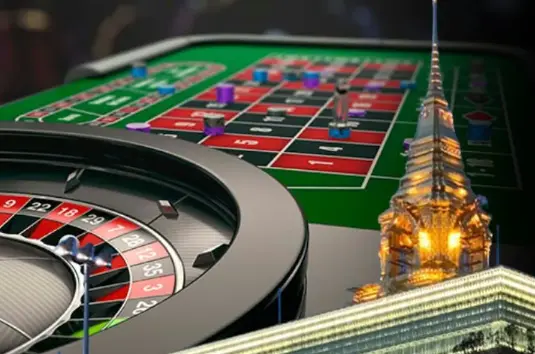
The Dice Audit Trail Nobody Wants to Talk About
Here is where operators get sloppy. Dice used in live dealer craps must be precision-machined to casino tolerance, typically within 0.0005 inches of perfect cube symmetry, with pip drilling that does not shift the center of gravity. Regulators in mature jurisdictions demand serialized dice logs, weight verification at fixed intervals, and a rotation schedule that retires dice before wear introduces bias. If your audit trail cannot show the exact dice set in play at a given timestamp, you have already failed the regulatory compliance stress test.
The table itself is the second battlefield. The back wall studs must maintain specular geometry, the felt must be replaced on a documented cycle, and the landing zone cannot develop grooves or divots that channel dice toward favorable faces. I have seen inspections where a single worn rubber pyramid invalidated an entire month of throw data. That is not paranoia. That is the standard.
Randomness Validation Through Bounce Telemetry
The smartest operations are now instrumenting the throw. High-speed cameras capture dice rotation, bounce count, and final resting orientation at frame rates that make statistical analysis possible. This is the real random table bounce validation layer, and it is what auditors actually want to see. You are not just claiming randomness; you are generating telemetry that a statistician can chi-square test against a uniform distribution across all 36 dice combinations.
Pass the test and you have defensible proof. Fail it, and the regulator assumes the worst. The bar is a p-value threshold that most operators never even compute because they lack the capture hardware. That gap is a licensing time bomb.
Dealer Motion and the Human Variable
Then there is the dealer. A skilled thrower can influence bounce patterns through release angle, spin, and velocity. Regulators know this, which is why dealer throw certification and periodic motion review are non-negotiable. The throwing protocol must be scripted and observed, and any deviation in the release motion triggers a review flag. Automated motion tracking that logs release parameters against outcome distributions is the only way to close this loop. 🎯
Operators who skip this step are gambling on their own license. The live dealer craps vertical attracts exactly the kind of scrutiny that punishes assumptions. Every bounce is evidence, every dice set is a serialized asset, and every throw is a data point that either validates your randomness claim or destroys it in front of an auditor who has seen every trick in the book.